Stamped Concrete vs. Pavers: Which Driveway Material Is Right for You?
By Noah James
• 6 min read • Founder, DrivewAI
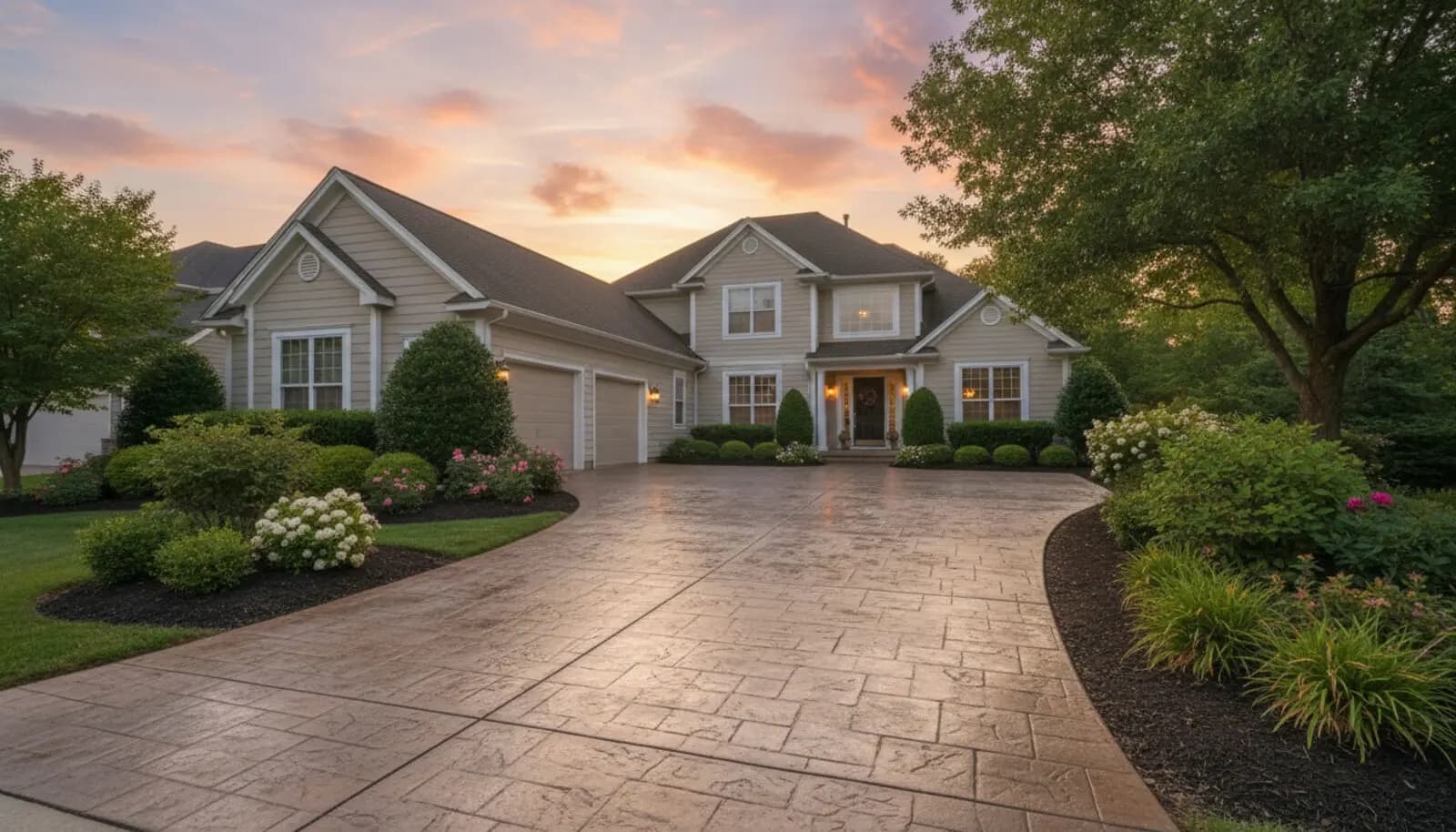
Choosing between stamped concrete and interlocking pavers is one of the biggest decisions homeowners face during a driveway reconstruction. Both materials look great, last decades, and add serious curb appeal — but they differ in cost, maintenance, repair, and overall aesthetic.
Cost Comparison
Stamped concrete typically runs $12–$18 per square foot installed, making it the more budget-friendly option for most projects. The entire driveway is poured as one continuous slab, which reduces labor time.
Interlocking pavers range from $15–$30 per square foot installed. The higher cost comes from the labor-intensive installation process — each paver must be individually placed on a prepared base.
For a standard 600 sq ft driveway, you're looking at roughly $7,200–$10,800 for stamped concrete versus $9,000–$18,000 for pavers.
Durability & Repairs
This is where pavers have a major advantage. If a section of your paver driveway cracks or settles, you can lift out individual pavers and replace them. The repair is virtually invisible.
Stamped concrete is a single slab. If it cracks — and concrete eventually cracks — repairs are noticeable. You can fill and seal cracks, but matching the original stamp pattern and color is nearly impossible.
Maintenance
Stamped concrete needs resealing every 2–3 years to maintain its color and protect against UV fade and water damage. Without sealing, the surface will eventually look washed out.
Pavers require occasional weeding between joints and may need polymeric sand reapplied every few years. Individual pavers can shift over time, especially in freeze-thaw climates, requiring periodic releveling.
Appearance
Stamped concrete offers a wide range of patterns — from natural stone to brick to wood plank. However, the pattern repeats, and up close, the texture is clearly stamped rather than natural.
Pavers offer genuine three-dimensional depth and texture. Each unit is a separate piece, creating authentic visual interest. The variety of colors, shapes, and laying patterns is virtually unlimited.
Climate Considerations
In cold climates with freeze-thaw cycles, pavers are generally the better choice. Their flexible joint system allows for natural expansion and contraction without cracking. Stamped concrete is rigid and more prone to cracking in these conditions.
In hot, dry climates, stamped concrete performs well and requires less maintenance since there are no joints for weeds to grow through.
Which Should You Choose?
Choose stamped concrete if: You want a great look on a tighter budget, live in a mild climate, and don't mind periodic resealing.
Choose pavers if: You want maximum durability, easy repairability, live in a cold climate, or want the most authentic natural stone or brick appearance.
How Long Does Each Material Last?
A well-installed stamped concrete driveway lasts 25–30 years with proper maintenance. The key word is "proper" — skip resealing for a few years and UV damage and moisture infiltration will accelerate surface deterioration. Cracks that form in the first 5 years are typically from improper base preparation or insufficient control joints, not material failure.
Paver driveways routinely last 30–50 years. The individual units themselves are extremely dense and durable — most manufacturers offer lifetime warranties on the pavers. The weak point is the base and joint sand, not the pavers. A properly installed paver driveway with a compacted aggregate base and geotextile fabric will outlast most homeowners' tenure in the house.
Does Stamped Concrete or Pavers Add More Home Value?
Both materials add measurable curb appeal, but the ROI depends on your market. According to the National Association of Realtors' Remodeling Impact Report, exterior improvements like driveway upgrades recover 60–70% of their cost at resale.
In neighborhoods with predominantly concrete driveways, upgrading to stamped concrete gives you differentiation without looking out of place. In upscale neighborhoods where natural stone and pavers are common, interlocking pavers match buyer expectations and avoid looking like a budget compromise.
The single most impactful factor is condition — a clean, well-maintained driveway in any material beats a cracked, stained driveway in a premium material. If your current driveway has significant cracking, oil stains, or settling, replacement in either material will improve your home's first impression dramatically.
What About Installation Time?
Stamped concrete installs faster — typically 2–4 days for a standard two-car driveway. The crew pours, stamps, and finishes in a continuous process. However, the driveway needs 7–10 days of curing time before you can drive on it.
Paver installation takes longer — usually 3–7 days depending on the pattern complexity and site preparation required. The advantage is that you can drive on pavers immediately after installation. No curing period means less disruption to your daily routine.
Can You DIY Either Option?
Stamped concrete is not a DIY project. The pouring, stamping, and coloring process requires specialized equipment and a crew working quickly before the concrete sets. Mistakes are permanent — you cannot re-stamp once the concrete hardens.
Pavers are technically DIY-friendly, but the base preparation is where most amateur installations fail. Insufficient excavation, poor drainage, or inadequate compaction will cause settling and shifting within the first year. If you want to attempt a DIY paver driveway, budget for a plate compactor rental and plan to excavate at least 8 inches for the aggregate base.
See Both Options on Your Driveway
The best way to decide? See both materials rendered directly on your home. Upload a photo of your current driveway and get AI-generated mockups in stamped concrete, interlocking pavers, and 11 other materials — in minutes. Seeing the materials on your actual property eliminates guesswork and gives you a concrete visual to share with contractors when getting quotes.
About the author
Noah James
Founder, DrivewAI
Noah James is the founder of DrivewAI, an AI home visualization platform that helps homeowners, contractors, and real estate agents preview renovations before committing. He built DrivewAI to close the gap between inspiration and execution in home improvement.
His writing focuses on practical renovation decision-making, material comparisons, and how AI visualization tools are changing the way people plan projects — from driveway replacements to full interior staging.
See your home transformed by AI
Upload a photo and get AI renderings across all styles. First one free.
Try DrivewAI Free