Japanese zen garden visualization
Japanese zen gardens are meditative spaces where every element has meaning — raked gravel representing water, carefully placed stones symbolizing mountains, and sculpted trees embodying patience and time. It's the most intentional of all landscape styles. DrivewAI renders your yard in zen garden style so you can see this serene transformation on your actual property.
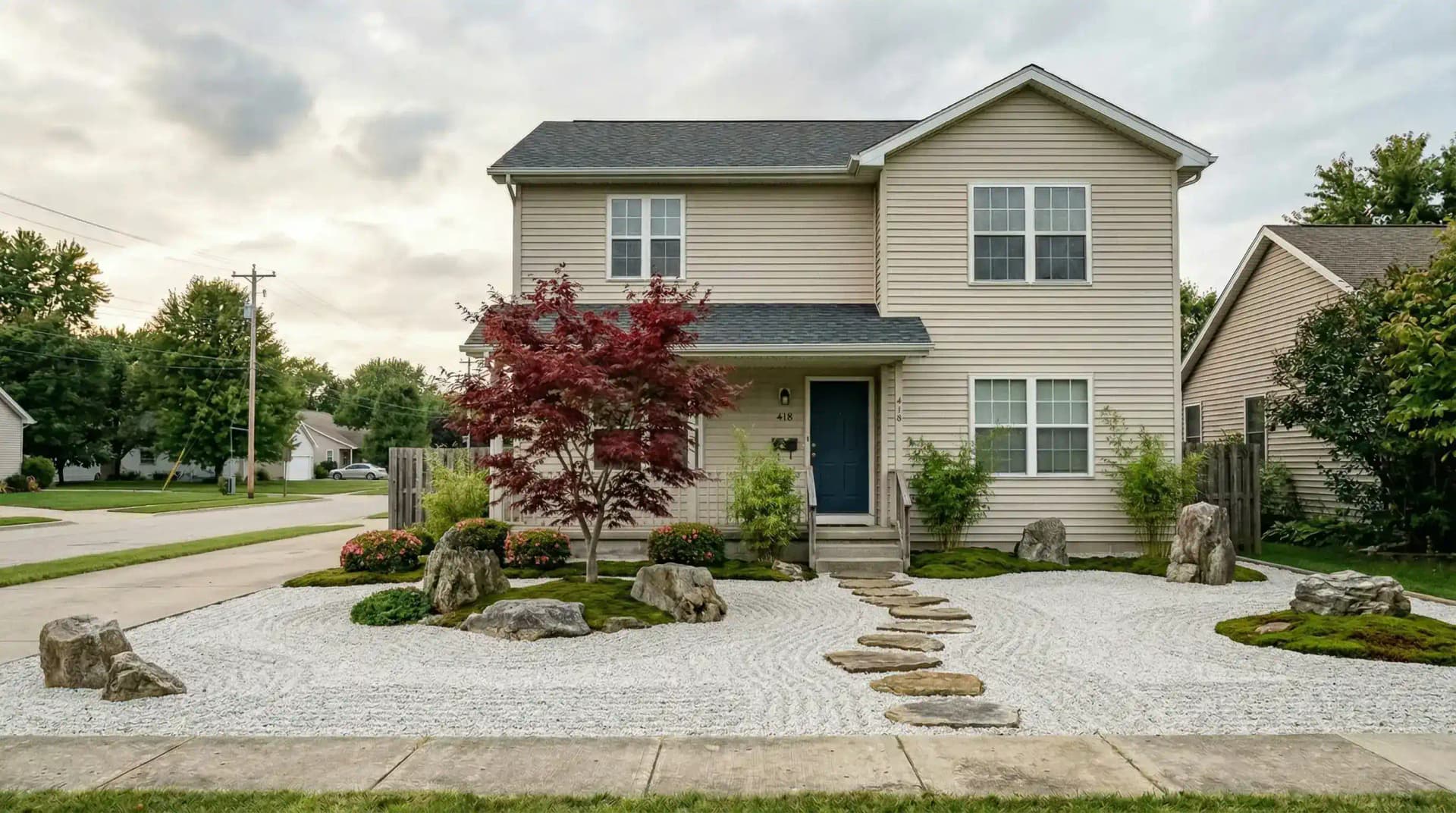
Last updated: March 2026· By Noah James
Zen garden elements
A traditional zen garden (karesansui) features raked white gravel or fine sand with carefully placed natural stones forming an asymmetric composition. Japanese maples, black pine, and azaleas provide the living structure. Bamboo adds vertical rhythm. Moss ground cover creates a carpet-like texture. A stone lantern and stepping stones provide functional beauty. A water basin (tsukubai) adds a contemplative focal point. Every element is placed with intention — asymmetric but balanced, with negative space as a deliberate design element.
Design philosophy
Zen gardens are designed around the Japanese aesthetic principle of wabi-sabi — finding beauty in imperfection and transience. Plants are pruned to reveal their natural form, not forced into geometric shapes. Stones are selected for their natural character, not their uniformity. The muted color palette — greens, browns, and grays — changes subtly through the seasons. A well-designed zen garden rewards slow observation and repeated viewing, revealing details that aren't apparent at a glance.
Practical considerations
Zen gardens are moderate-maintenance. The raked gravel needs periodic re-raking (especially after rain or wind), and the disciplined plant forms require annual pruning by someone who understands Japanese garden techniques. Moss ground cover needs shade and moisture. The upfront cost can be significant because the natural stones and specimen trees are the most expensive elements. However, the limited plant count keeps ongoing costs moderate. Zen gardens work in USDA zones 5–9 with appropriate species selection.
FAQ
Japanese Zen questions
A professional zen garden installation costs $10,000 to $25,000 for a front yard. The main cost drivers are natural stone selection, specimen trees, and skilled installation. Simpler designs with fewer elements can reduce the cost significantly.
Yes — with appropriate plant selection. Japanese maples, black pine, azaleas, and bamboo are hardy through zone 5. The stone, gravel, and hardscape elements are climate-independent. Moss may need supplemental watering in dry climates.
Explore more styles
Other landscape styles
See it before you build it.
Pay only if you love it.
Start with the photo first. Your first render each month is free.
Pay when you want side-by-side options, HD downloads, or specific edits.
Free
Photo first, account second
- Choose your photo before sign-up
- 1 free render each month
- No credit card
$2.99
When one option is enough
- 1 customized render
- Pick from all styles
- Add specific edits
- Full HD download
- Saves to your account
$9.99
$2.00 per render to compare options
- 5 customized renders
- Mix and match styles + edits
- Everything in single
- Best for deciding what to build
Quote the driveway while you are still there.
Built for solo paver and concrete contractors quoting 30-50 jobs a month. Open the phone flow, confirm a driveway photo, pick the materials you actually sell, then show selected options from the same job image.
Address or camera
Selected variants
Saved job library
Pro subscription
Unlimited contractor generations.
- Unlimited generations
- 1-5 selected variants per quote
- Address Assist or camera upload
- Square footage measurement notes
- Past quote library