Exposed Aggregate vs Stamped Concrete: Which Driveway Finish Wins?
By Noah James
• 7 min read • Founder, DrivewAI
Exposed aggregate and stamped concrete sit at the exact same price point — $12-$20 per square foot installed — which means this decision comes down to aesthetics, climate, and maintenance tolerance rather than budget. They're both concrete underneath, so the structural performance is identical. It's all about the finish.
Having compared dozens of installations of both, here's what actually matters.
What They Are (In Case You're Starting From Zero)
Stamped concrete is poured concrete with patterns and textures pressed into the surface while it's still wet. Metal stamp mats create the impression of natural stone, brick, slate, wood planks, or cobblestone. The surface is then stained or tinted to add color. When done well, it looks like expensive natural materials at a fraction of the cost.
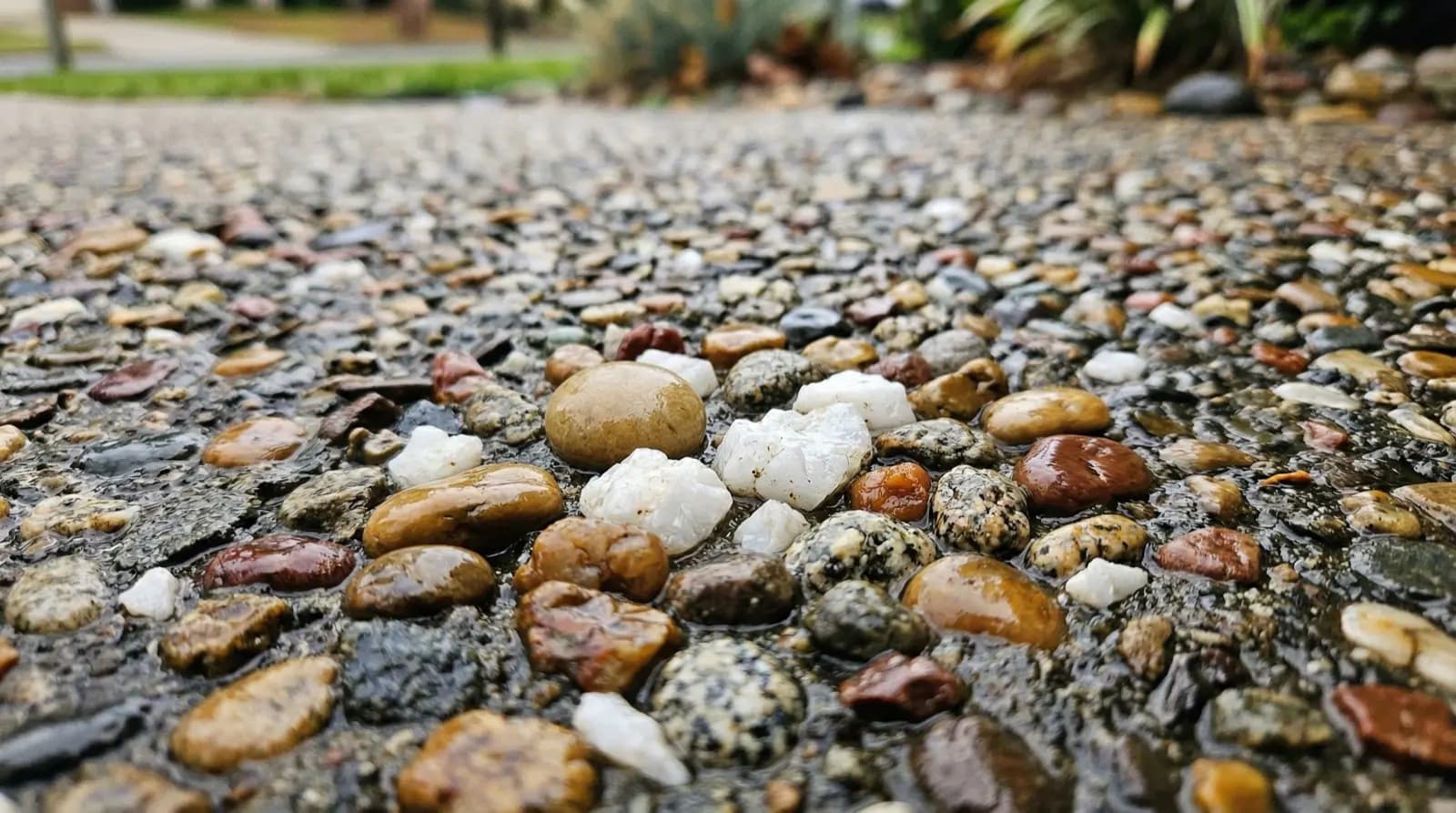
Exposed aggregate is poured concrete where the top layer of cement paste is washed away before it fully cures, revealing the natural stones, pebbles, and sand within the mix. The result is a textured, speckled surface that looks organic and natural. No stamps, no patterns — just the raw beauty of the aggregate itself.
Cost Comparison
| Exposed Aggregate | Stamped Concrete | |
|---|---|---|
| Installed cost/sq ft | $12-$20 | $12-$18 |
| 600 sq ft driveway | $7,200-$12,000 | $7,200-$10,800 |
| Sealing | Every 3-5 years | Every 2-3 years |
| Seal cost | $0.50-$1.50/sq ft | $0.50-$1.50/sq ft |
| Crack repair | Difficult to match | Very difficult to match |
| Lifespan | 25-30 years | 25-30 years |
Sources: HomeAdvisor 2025, Concrete Network contractor surveys
The cost difference is marginal. Exposed aggregate can run slightly higher because premium aggregate mixes (with specific stone types and colors) add to material costs. Stamped concrete can run higher when complex multi-stamp patterns or multiple color applications are involved. For most standard installations, you're looking at nearly identical pricing.
Appearance: Totally Different Vibes
This is where these two finishes diverge completely.
Stamped concrete says: "I want the look of natural stone or brick, but at a concrete price." It's polished, intentional, and somewhat formal. The patterns are repeating (because stamp mats are a fixed size), which means up close, you can spot the repetition — the same stone shape appearing every 24-36 inches. From the street, though, it reads as natural stone, and for most people, the street view is what matters.
Exposed aggregate says: "I want something organic that doesn't try to be something it isn't." It's earthy, textured, and unpretentious. Every pour is genuinely unique because the natural distribution of stones within the concrete is random. There's no pattern to spot, no repetition. It just looks like a natural surface.
Best home styles for stamped: Traditional, colonial, Mediterranean, craftsman, Tudor. Stamped concrete complements homes with architectural detail and formality.
Best home styles for exposed aggregate: Ranch, coastal, mid-century modern, farmhouse, and homes with natural landscaping. Exposed aggregate pairs with properties that have a more relaxed, organic aesthetic.
The Traction Question
Exposed aggregate is meaningfully more slip-resistant than stamped concrete. The exposed stones create a naturally rough texture that provides excellent grip, even when wet. This is a real safety advantage in rainy climates, near pool decks, or on sloped driveways.
Stamped concrete, particularly when sealed with a glossy sealer, can be slippery when wet. Some stamped concrete sealers include anti-slip additives (essentially fine sand mixed into the sealer), which helps but doesn't fully match exposed aggregate's natural grip. If your driveway has any significant slope, this is a factor worth weighing.
Maintenance: Both Need Sealing, But Different Cadences
Both finishes need periodic sealing to maintain their appearance and protect against staining, UV fade, and water penetration. But the schedules differ.
Stamped concrete needs resealing every 2-3 years. This is non-negotiable. Without sealer, the color fades noticeably within 18 months — the stain literally washes out with rain and UV exposure. The sealer also provides the slight sheen that makes stamped concrete look like polished stone. Let the sealer lapse and your "$15,000 flagstone driveway" starts looking like gray concrete with lines on it.
Exposed aggregate needs resealing every 3-5 years. Because exposed aggregate doesn't rely on surface stain for its appearance (the color comes from the stones themselves, which don't fade), the sealer is primarily protective rather than cosmetic. If you skip a sealing cycle, the surface won't look dramatically different — the stones retain their natural color. The sealer mainly prevents staining and makes the surface easier to clean.
This difference matters. Over 20 years, stamped concrete needs 7-10 resealing applications. Exposed aggregate needs 4-6. At $300-$900 per application (professional), that's a meaningful lifetime maintenance gap.
Crack Behavior
Both are concrete slabs, so both will eventually develop cracks. This is concrete's fundamental limitation — it's rigid, and ground movement (freeze-thaw, settling, tree roots) creates stress fractures.
Here's the key difference: cracks are less visible in exposed aggregate. The speckled, textured surface camouflages hairline cracks effectively. You have to look closely to spot them. On stamped concrete, cracks are immediately obvious because they disrupt the geometric stamp pattern — a crack running through a "stone" breaks the visual illusion.
Neither finish is easy to repair invisibly. Matching the aggregate mix or the stamp pattern and color on a patched area is extremely difficult. Most repairs are noticeable. This is true of all concrete finishes — it's an inherent limitation of the material.
Climate Considerations
Cold climates: Both are vulnerable to freeze-thaw damage and salt spalling. If you're in zones 3-5, use a penetrating sealer rather than a film-forming sealer — it allows moisture vapor to escape from within the concrete, reducing the internal pressure that causes spalling. Consider air-entrained concrete (your contractor should know this) for both finishes.
Hot, dry climates: Both perform well. Exposed aggregate has a slight edge because the natural stones retain less heat than sealed stamped concrete, keeping the surface slightly cooler. Stamped concrete sealers can also become soft and tacky in extreme heat (110°F+), which doesn't happen with exposed aggregate's penetrating sealer.
Wet climates: Exposed aggregate wins on traction. If your area gets frequent rain, the natural grip of exposed stones is a real practical advantage over stamped concrete's smoother surface.
The Decision Framework
Choose stamped concrete if: You want your driveway to mimic the look of natural stone, brick, or tile. Your home has traditional or formal architecture. You're willing to commit to resealing every 2-3 years. Your driveway is relatively flat (minimal slope).
Choose exposed aggregate if: You prefer a natural, organic look that doesn't imitate another material. Your home has casual, ranch, or contemporary architecture. You want lower maintenance frequency. Your driveway has any significant slope (traction advantage). You live in a wet climate.
Consider neither if: You're in a severe freeze-thaw climate — interlocking pavers handle temperature extremes better than any concrete finish.
See Both on Your Home
The fastest way to settle this debate is to see both finishes rendered on your actual driveway. Upload a photo to DrivewAI and compare exposed aggregate and stamped concrete side by side, along with 5 other material options. Two minutes versus weeks of wondering.
About the author
Noah James
Founder, DrivewAI
Noah James is the founder of DrivewAI, an AI home visualization platform that helps homeowners, contractors, and real estate agents preview renovations before committing. He built DrivewAI to close the gap between inspiration and execution in home improvement.
His writing focuses on practical renovation decision-making, material comparisons, and how AI visualization tools are changing the way people plan projects — from driveway replacements to full interior staging.
See your home transformed by AI
Upload a photo and get AI renderings across all styles. First one free.
Try DrivewAI Free