How to Plan a Driveway Renovation Without Blowing Your Budget
By Noah James
• 9 min read • Founder, DrivewAI
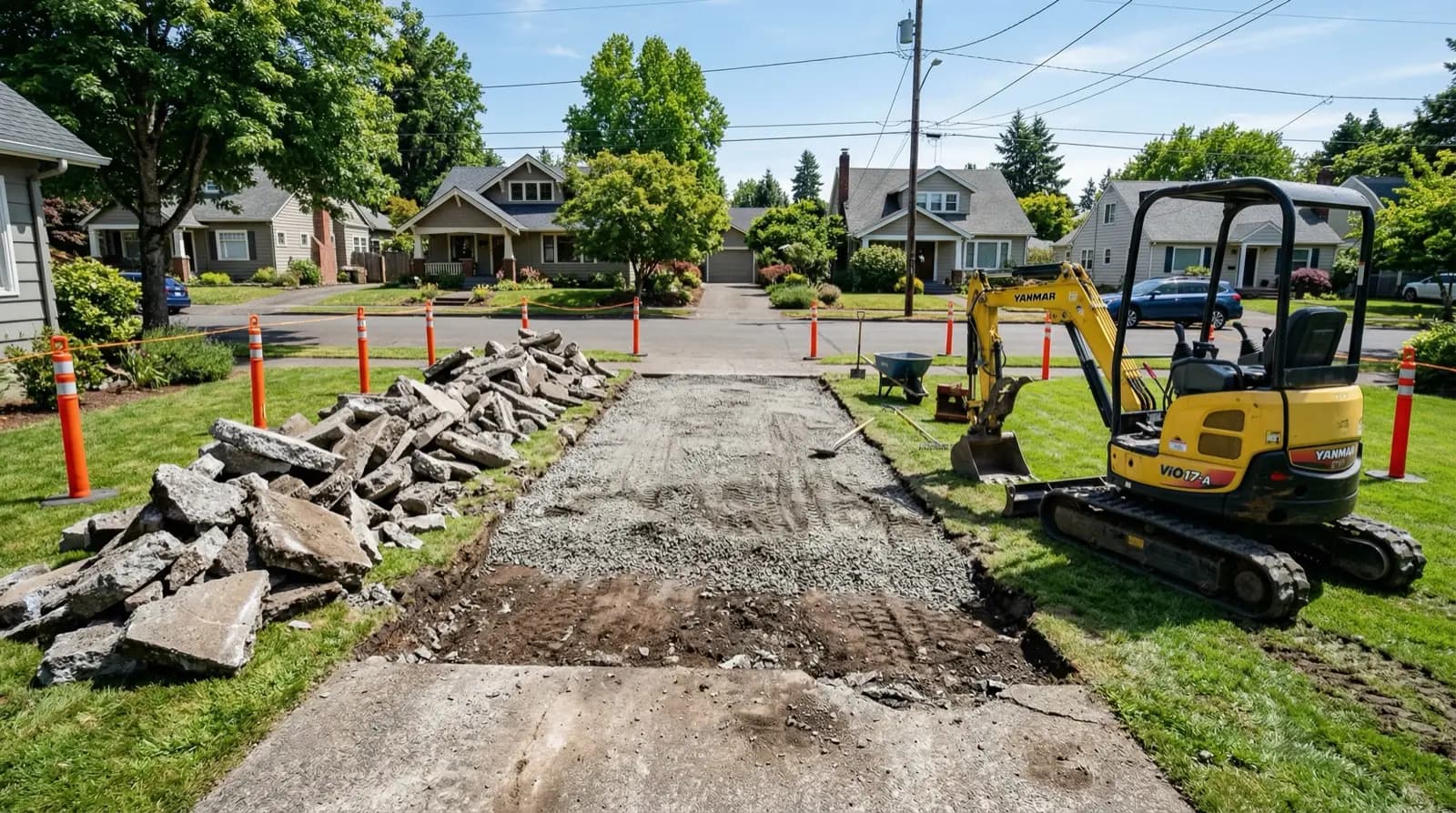
Nobody wakes up excited about a driveway renovation. It's not like a kitchen remodel where you get to pick out appliances and tile. A driveway renovation is a grudge purchase — your old driveway finally got bad enough that you can't ignore it anymore, and now you're about to spend a lot of money on something you barely think about.
That mindset is exactly why driveway renovations go over budget so often. Homeowners want to get it over with fast, so they skip the planning steps that prevent expensive surprises. Don't do that.
Step 1: Figure Out If You Actually Need a Full Renovation
Not every damaged driveway needs replacement. Before committing to a full renovation, have a contractor assess whether repair or resurfacing is viable.
Repair makes sense when: You have isolated cracks (not a network of them), small areas of settlement, or surface-level damage only. Concrete can be patched, asphalt can be filled and sealed, and individual pavers can be replaced. Cost: typically $500-$2,000.
Resurfacing makes sense when: The base is still solid but the surface is worn, discolored, or outdated. Concrete can be resurfaced with a thin overlay ($3-$8/sq ft). Asphalt can get a fresh top layer. Cost: roughly 40-60% of full replacement.
Full renovation is necessary when: The base has failed — you see large areas of settling, heaving, alligator cracking (a network of interconnected cracks), or drainage problems. Once the base is compromised, no amount of surface work will fix the problem. You need to demo the old surface, regrade, rebuild the base, and install new material.
Step 2: Set a Realistic Budget (Plus Contingency)
Here's what a full driveway renovation actually costs, broken down by phase:
Demolition and removal: $1,000-$3,500 This covers breaking up the old surface, loading it into trucks, and hauling it to a recycling facility. Concrete is more expensive to remove than asphalt because it's heavier and harder to break. If you have a thick reinforced concrete slab, expect the higher end of this range.
Base preparation: $1,000-$3,000 Grading, compacting, and installing the aggregate base layer. If your subsoil has drainage issues (clay soil is the usual culprit), you may need additional excavation and gravel. This is where hidden costs live — nobody knows what's under your old driveway until they rip it up.
Material and installation: $4,200-$30,000 This is the big variable, and it depends entirely on the material you choose and your driveway's square footage. See the material costs in the comparison table below.
Drainage: $500-$3,000 Channel drains, French drains, or regrading to direct water away from the garage and home foundation. Not every project needs this, but if water pools on your current driveway, it will need to be addressed.
Permits: $100-$500 Most municipalities require a permit for driveway replacement. Some also require an inspection of the base layer before the new surface is installed. Your contractor should handle permits, but confirm this upfront.
Total realistic budget for a standard 600 sq ft driveway: - Budget option (asphalt): $6,000-$12,000 - Mid-range (stamped concrete or pavers): $10,000-$22,000 - Premium (natural stone): $18,000-$35,000
Always add 15-20% contingency. Underground surprises — tree roots, old utilities, inadequate base material, unexpected drainage problems — are the norm, not the exception.
Step 3: Choose Your Material Before Choosing Your Contractor
This is counterintuitive, but choosing your material first gives you a significant advantage during the contractor selection process.
When you approach contractors saying "I want a paver driveway in herringbone pattern, charcoal gray, approximately 600 sq ft, with channel drainage at the garage apron," you'll get specific, comparable quotes. When you say "I need a new driveway, what do you suggest?" you'll get three wildly different proposals that are impossible to compare.
Use driveway mockup software to visualize options on your property first. DrivewAI lets you see all styles on your actual home in a couple of minutes. Pick your top 2 before calling anyone.
Step 4: Get Quotes the Right Way
Three quotes minimum. Always. Here's how to make them count:
Schedule all three assessments within the same week. Your memory of each contractor's pitch will be fresher, and you'll notice differences in professionalism, communication, and attention to detail.
Ask identical questions to each contractor: - What base preparation do you recommend for my soil type? - How do you handle drainage? - What's the warranty on materials and labor? - What's the timeline from start to completion? - What happens if you hit an unexpected problem (roots, utilities, poor subgrade)? - Can I see 3-5 completed driveways you've installed locally?
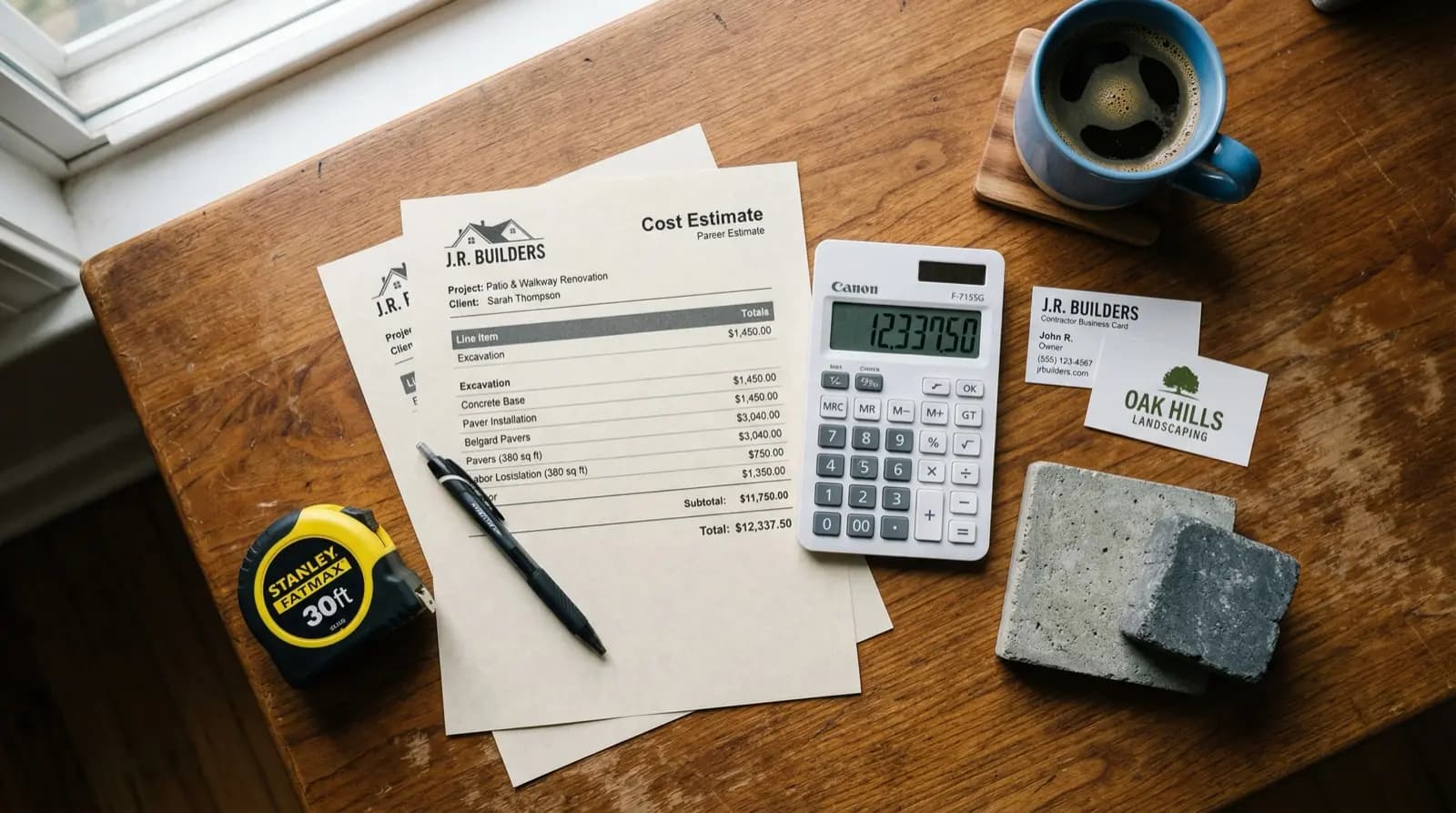
Get written quotes with line items. A lump-sum quote like "$14,000 for the driveway" is a red flag. You need demolition, base prep, material, labor, drainage, and permits broken out separately. This protects you from scope disputes later.
Step 5: Understand the Drainage Situation
I keep hammering this point because it's the number one cause of driveway failures. According to the Portland Cement Association, improper drainage is responsible for more than 60% of premature concrete driveway failures.
Water needs to flow away from your driveway and away from your home's foundation. The standard is a minimum 1% slope (1/8 inch per foot) away from the garage. Your contractor should verify this during the site assessment.
If your current driveway has standing water issues, your renovation plan needs to include drainage solutions. Channel drains at the garage threshold, French drains along the driveway edges, or regrading the entire surface are common fixes. Budget $500-$3,000 for drainage, depending on the severity.
Step 6: Plan for the Disruption
Driveway renovations are disruptive. You need to plan for:
Parking: You won't have a driveway for 3-7 days minimum (asphalt) or 5-14 days (pavers/stone). Where will your cars go? Check with your HOA or municipality — some have rules about street parking duration.
Access: Heavy equipment needs to reach your driveway. If you have a narrow lot, the excavator may need to cross your lawn. Discuss restoration of any lawn damage with your contractor beforehand.
Curing time: Fresh concrete needs 7 days before light vehicle traffic and 28 days to reach full strength. Asphalt needs 3-5 days. Pavers can handle traffic as soon as the edging is set and sand is swept. Plan your schedule accordingly.
Noise and dust: Concrete demolition involves a jackhammer or saw-cutting machine. It's loud. Warn your neighbors and check local noise ordinances for permitted work hours.
Step 7: Don't Skip the Final Inspection
Once the project is "done," walk the entire driveway with your contractor before making final payment. Check for:
- Even surface without dips or high spots (use a long straightedge or level) - Proper slope directing water away from the garage - Clean expansion joints (concrete) or tight joint lines (pavers) - No material damage, chips, or cracks - Edging is secure and properly installed - All debris, soil, and equipment marks are cleaned up
Take photos of the completed work with your phone. These serve as a baseline if any warranty issues come up later.
The Renovation Planning Shortcut
The planning process above takes most homeowners 4-6 weeks from "I need a new driveway" to "the contractor is scheduled." The biggest time sink is usually step 3 — material selection.
Tools like DrivewAI compress that step from weeks of research into minutes. Upload your driveway photo, see 6 material options on your actual home, and move straight into the contractor quoting phase with a clear vision of what you want. The rest of the planning still takes time, but at least you're not stuck in the "should I do pavers or concrete?" loop for a month.
About the author
Noah James
Founder, DrivewAI
Noah James is the founder of DrivewAI, an AI home visualization platform that helps homeowners, contractors, and real estate agents preview renovations before committing. He built DrivewAI to close the gap between inspiration and execution in home improvement.
His writing focuses on practical renovation decision-making, material comparisons, and how AI visualization tools are changing the way people plan projects — from driveway replacements to full interior staging.
See your home transformed by AI
Upload a photo and get AI renderings across all styles. First one free.
Try DrivewAI Free